Congratulations, you won the auction! You have your new premium antique rug, and it looks great in your home. You want to keep it looking nice for all the years you own it. So, what can you do to keep it looking beautiful?
Owning a piece of fine art or an antique rug is more than a purchase — it’s acquiring a piece of history, craftsmanship, and beauty that can last for generations. It may also very well appreciate in value over time. Taking care of it is the best way to make sure it stays attractive and valuable. Here are some tips to taking care of your new rug.
Control the Environment: The Foundation of Preservation
Ideal temperature for a rug is between 65-72 degrees. You want humidity to be between 45%-55%. High humidity can cause mold, mildew, or warping in rugs and canvas stretching/cracking in paintings. Low humidity makes fibers brittle. Rapid changes accelerate damage.
Use a hygrometer to monitor your space. In humid climates, consider a dehumidifier; in very dry areas, a humidifier can help.
Protect from Light and UV Damage
Sunlight is one of the biggest enemies of both art and textiles. Direct sunlight can damage rugs over time. UV can cause the fibers to become brittle and pigment to fade. These are value-destroyers.
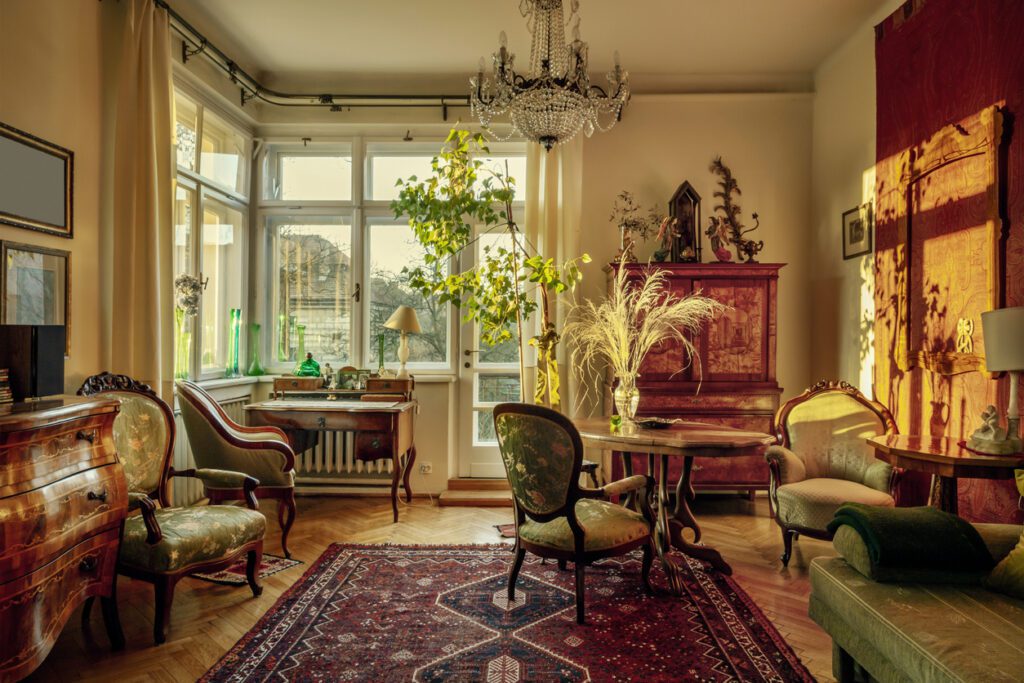
Try to keep your rug away from windows or make sure to use curtains, blinds an/or window films. These can really protect your precious new rug.
Pro tip: Rotate your rugs and rearrange artwork every 3–6 months. This ensures even (minimal) exposure and gives your collection a fresh look.
Cleaning and Maintenance
Gentle, regular care prevents dirt and dust from becoming embedded and abrasive. Vacuum weekly for best results. Vacuum the front, then flip and vacuum the back to remove grit. Rotate the rug periodically to distribute wear evenly, especially in high-traffic areas.
Make sure to never use chemicals, steam cleaners, or store-bought solution. These are known to damage fibers and cause serious damage to antique rugs.
Address spills immediately: Blot (don’t rub) with a clean white cloth and plain water. For stubborn stains, consult a professional rug conservator right away.
Use Protective Accessories
Always place a high-quality, non-slip rug pad underneath. It cushions the rug, prevents slipping, and reduces wear on the foundation. Elevate rugs slightly under heavy furniture legs with coasters or felt pads to minimize crushing pile.
Proper Storage When Not on Display
When not in use make sure to stow your rug properly. Make sure to clean the rug first before putting it in storage. Make sure the storage space fits the temperature and humidity parameters we mentioned above.
Roll the rug and never fold it. Wrap in breathable material like acid-free tissue, unbleached cotton, or Tyvek (avoid plastic, which traps moisture). Add moth repellent if desired (cedar or lavender sachets are safer than chemicals) but ensure good airflow.
We hope these tips help you in the long-term care of your new rug. With proper care, it can stay as nice as the day you purchased it indefinitely.